

Description
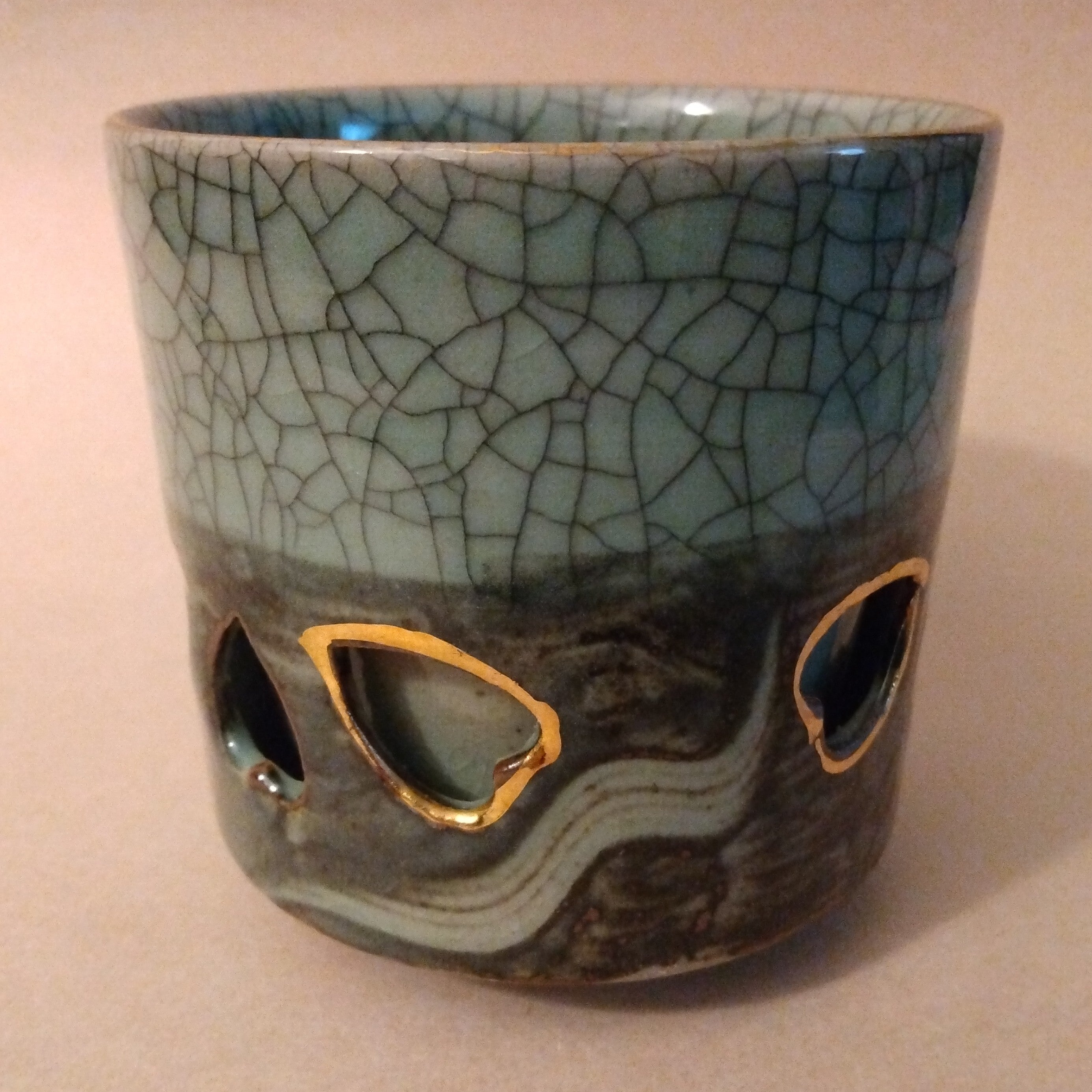
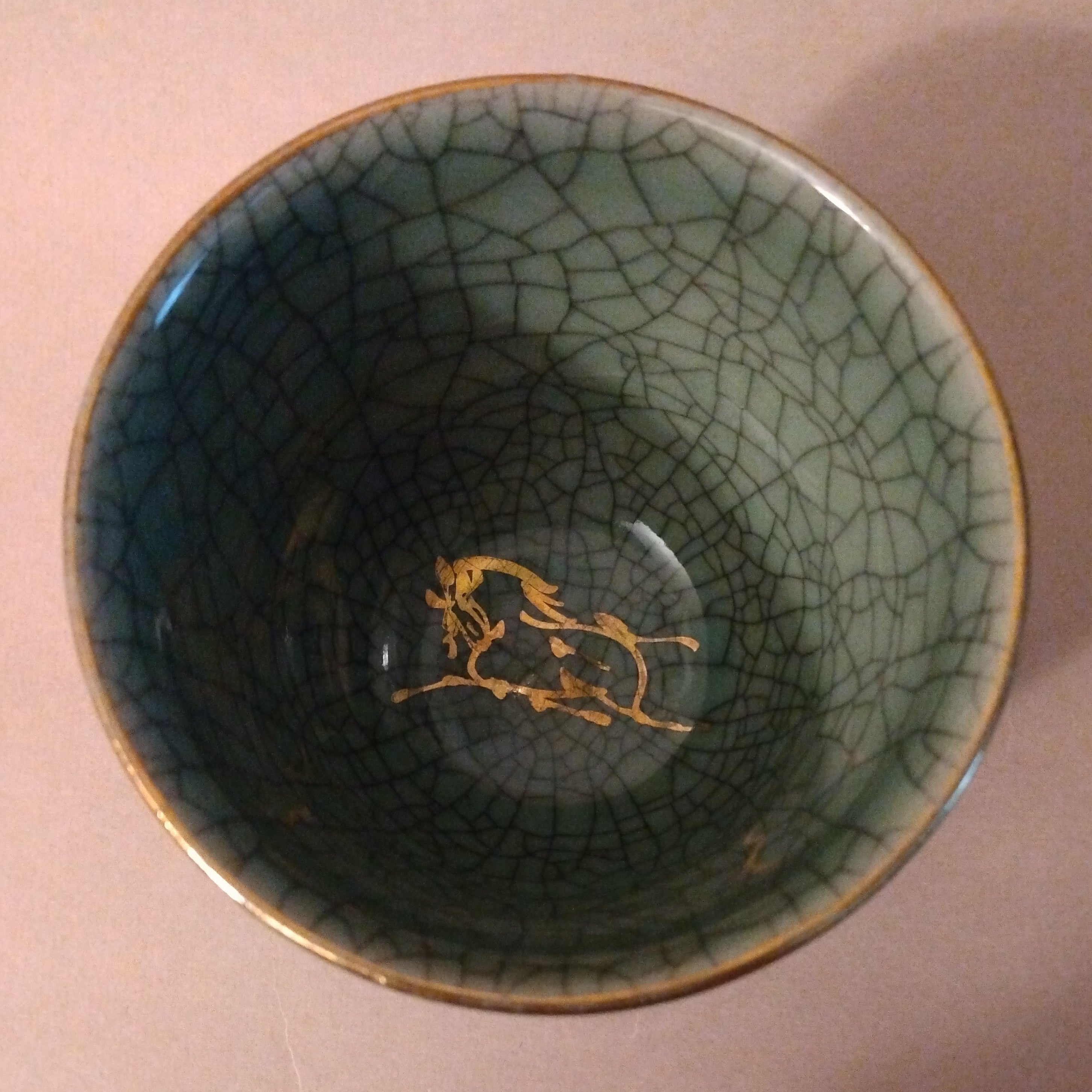
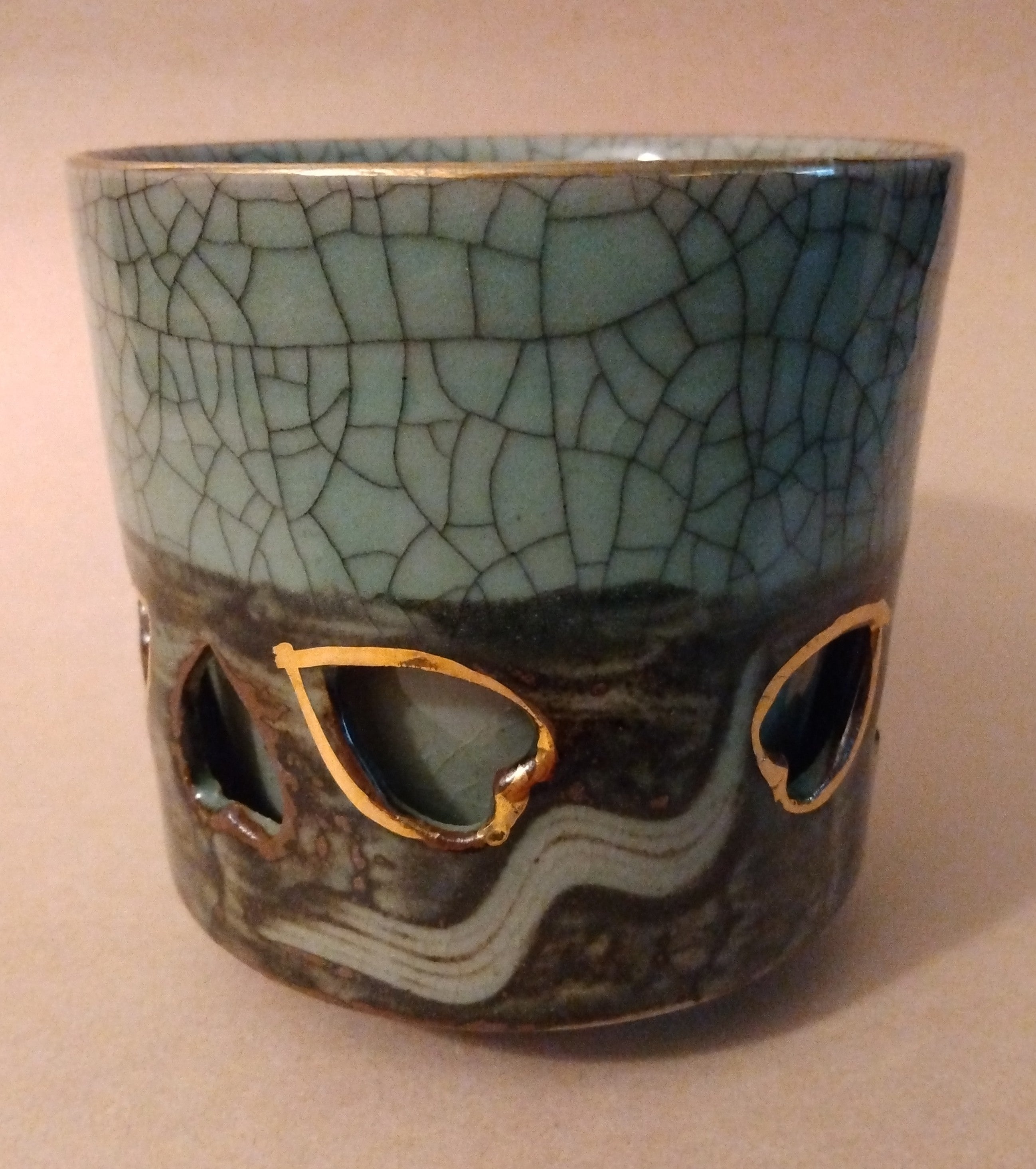
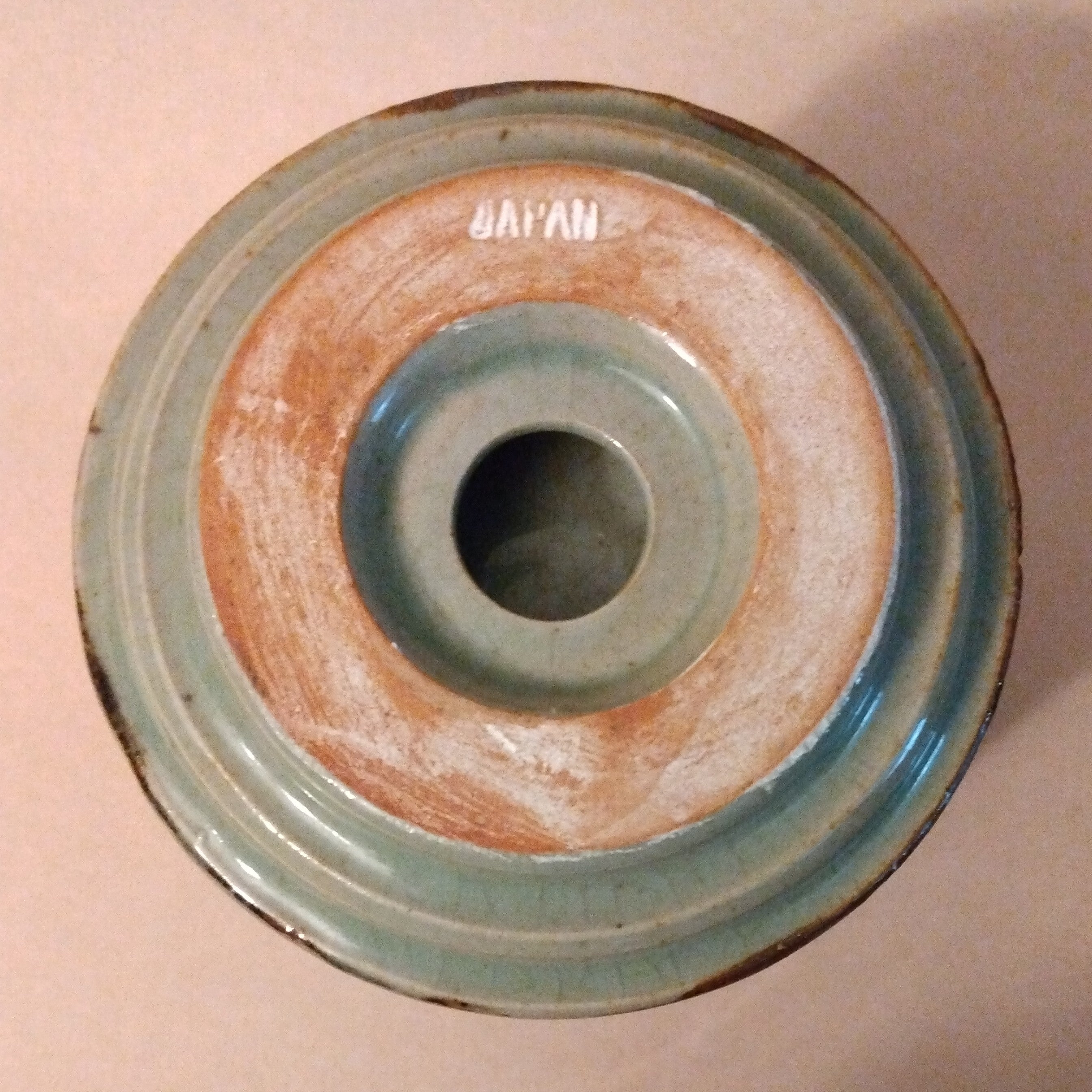
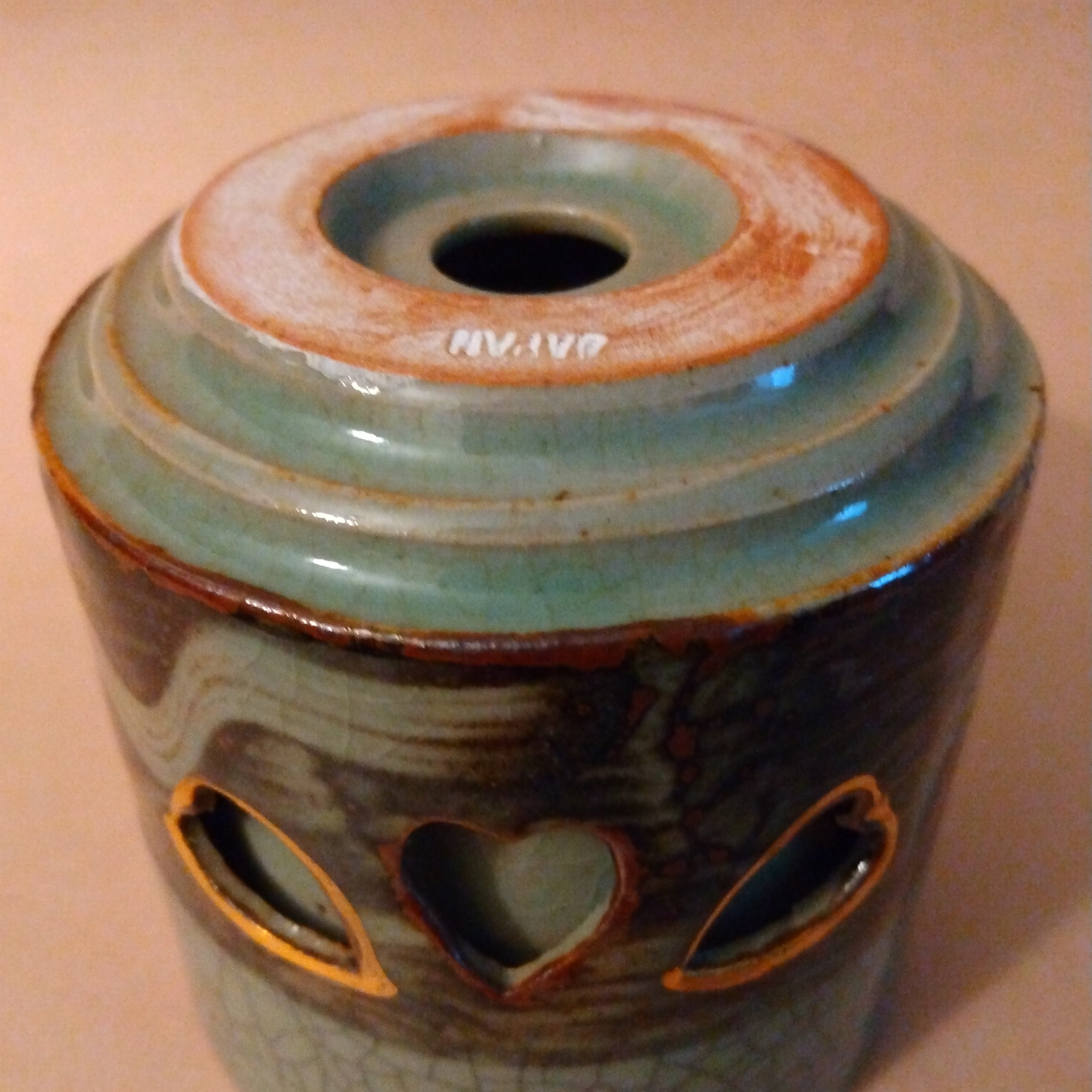
Obori-Soma-yaki has been made in the region of Namie Village in current Fukushima Prefecture for some 300+ years. In the mid-late 20th century, their "double-wall" construction tea wares were a very popular domestic and export (especially to the U.S.) item. The double-wall construction serves as a good inner insulator to keep the contents warm, and an outer insulator for the hands when holding hot liquids. The clay is a locally mined blue porcelain stone, and the Celadon glaze creates a crackle pattern in firing. Obori-Soma wares are often decorated with a "hashirigoma" (running horse), many times painted in gold, and this cup has such a horse painted in the interior well of the cup. This goes back to a Ninsei painting of the regions famous horse festivals and is also a symbol of good fortune. The heart-shaped cut-outs are actually plover birds, gliding over the waves. These are some of the distinctive features of Obori-Soma-yaki. H. 3.5"(9cm) x Dia. 3.5"(9cm). 369 grams. Volume 280ml(9.45oz). This is a very large-size yunomi, often referred to in Japan as a "Bancha-yunomi", meant for teas that can be drunk with hotter water, thus in larger volumes, such as Bancha, Houjicha, or Genmaicha. I have found that this size of cup even works well as a "tsutsugata" (cylinder-shape) tall and narrow chawan (tea bowl) for enjoying whisked matcha.
Unfortunately, all of the 25 Soma kilns were shut down after the Great Tohoku Earthquake and Tsunami hit the Fukushima coast line creating the nuclear disaster at the nearby Daiichi Nuclear Power Plant. Recently, a few of the kilns have re-opened further inland in areas like Nihonmatsu, Aizu, Koriyama, and Minami-Soma. Their resiliency and determination will hopefully keep the Obori-Soma pottery tradition alive for future generations.