

Description
|
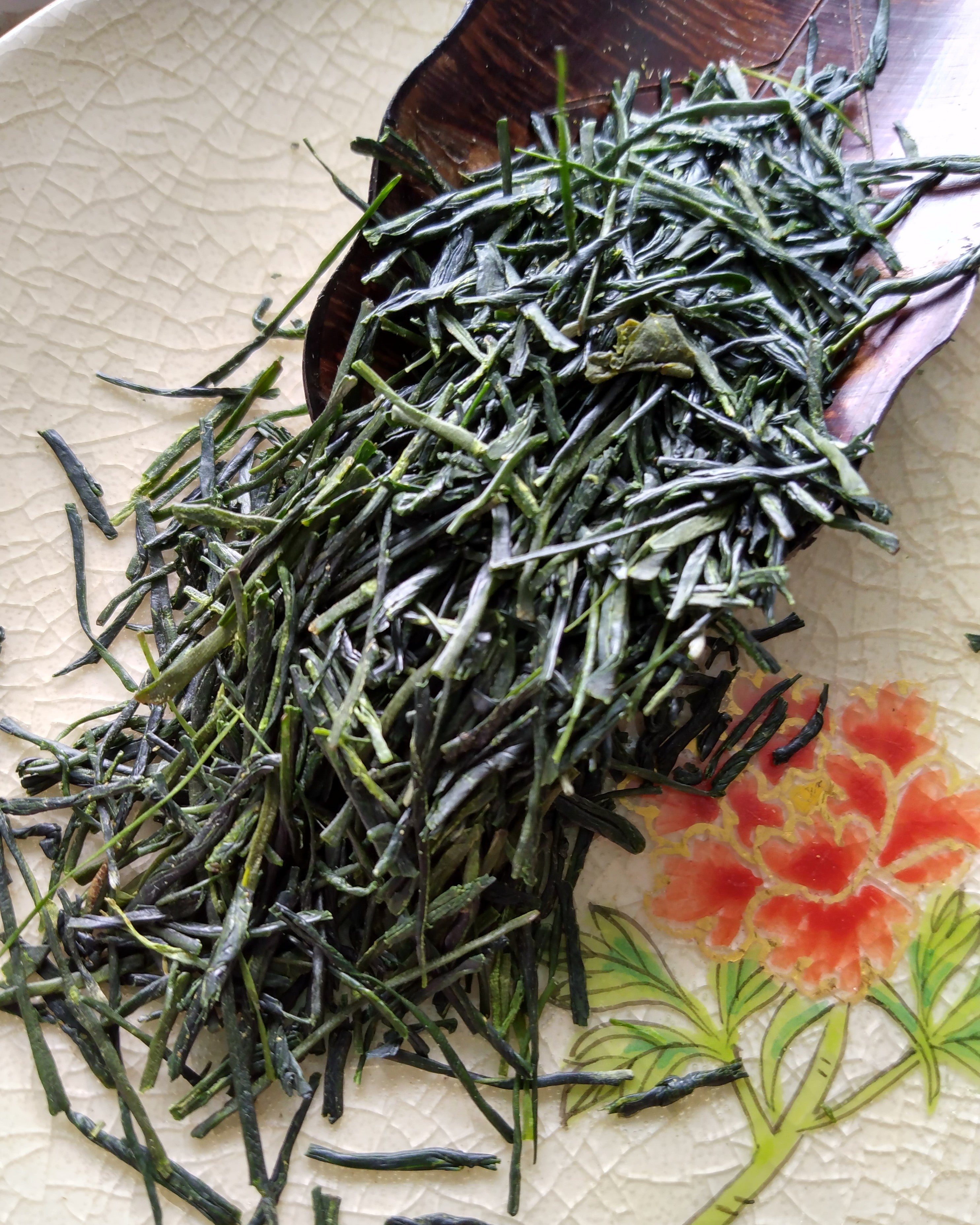
Premium Blend Gyokuro - 2025 First Harvest Tea. Naturally grown with no synthetic pesticides or fertilizers. This Shibushi Gyokuro infuses to a medium green color with a faint grassy aroma and full body. It is very smooth, with just a slight note of shibumi (astringency) on the finish of the first infusion that gives way to more amami (sweetness) on later infusions. There is also a note of umami (savoriness) like dashi broth, to which good Gyokuro is often compared. The finish on second through fourth infusions is smooth with very low astringency. Gyokuro, "Jade Dew", is cultivated much like Sencha up until a few weeks before harvest when reed, straw, or netting is applied to cover the tea plants. This partial blocking of sunlight increases L-theanine and caffeine, as well as the plant's natural chlorophyll production which gives more green color to the leaves. These changes also lead to flavor changes with more sweetness and savoriness, amami and umami. Simultaneously catechins and tannins, responsible for some of tea's astringency, are decreased. To be considered Gyokuro, shading must take place for at least 20 days, and typically Gyokuro are shaded about 20-30 days before harvest. To cover (kabuseru) less than 20 days makes the tea a "Kabuse Sencha". Gyokuro is typically the most expensive of the Sencha-type teas, and when tea is made from the stems of Gyokuro, it is referred to as Karigane, or in some parts of Japan as Shiraore (instead of the standard term "Kukicha" used for stems of Sencha, Houjicha, etc.) While Yabukita is the most common cultivar used to make Sencha in Japan, Gyokuro often uses, but is not limited to, Saemidori, Okumidori, and Asahi cultivars. The city of Shibushi is in the north-eastern corner of Kagoshima prefecture, bordering Miyazaki Prefecture to the north, and facing out towards Shibushi Bay to the south. Two of the neighbors are also well-known tea-growing regions, Soo in Kagoshima and Miyakonojo in Miyazaki. Shibushi is the second largest tea producer in Kagoshima Prefecture, which itself became the largest producer of tea by Prefecture in all of Japan in 2025 (overtaking Shizuoka, which has held the record for ore than half a century). Shibushi is best known for the production of Gyokuro, as well as Karigane (stems of Gyokuro), Sencha, Tamaryoku Sencha, and Matcha. The city of Shibushi was formed in 2006 by the mergers of Ariake, Matsuyama, and Shibushi Towns. "Ariake-cha" (Ariake Tea) and "Matsuyama-cha" (Matsuyama Tea) have long been reputable teas in the region, and now all fall under the umbrella of Shibushi Tea. |